Badlands National Park Overview
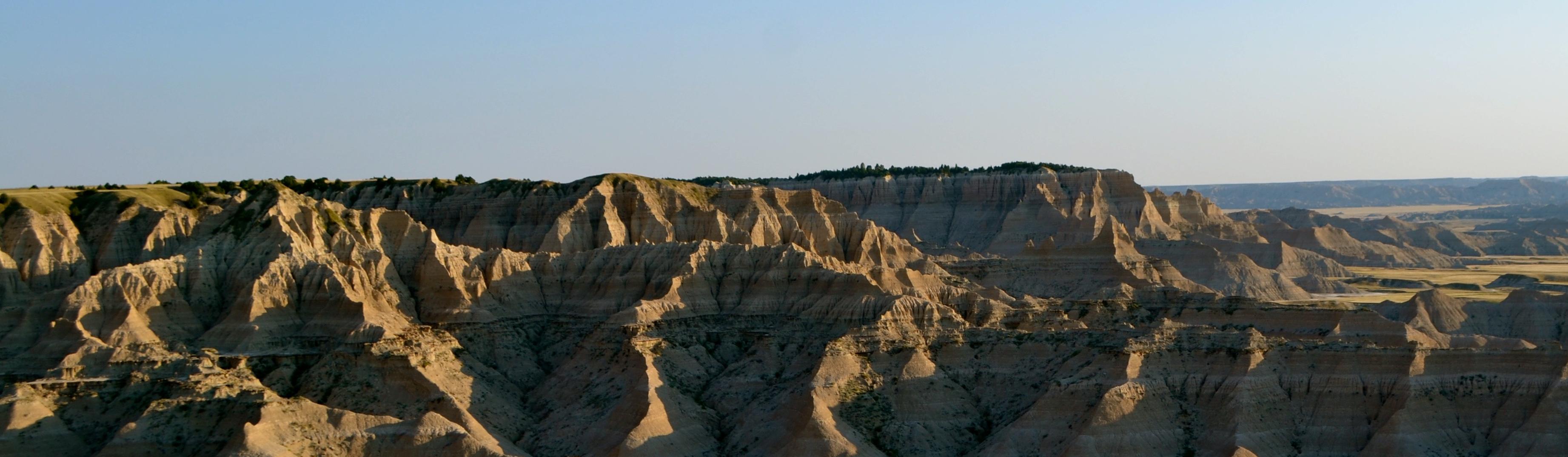
Badlands National Park protects about 244,000 acres of eroded buttes, pinnacles, spires, mixed-grass prairie, and fossil beds in western South Dakota. The park recorded 1,139,361 recreation visits in 2025, drawing travelers to one of the most dramatic prairie-and-badlands landscapes in the United States. Badlands Loop Road makes the park approachable for short visits, while trailheads and overlooks give visitors quick access to sunrise, sunset, wildlife, and open-country views.
The park preserves one of the richest Oligocene fossil deposits in North America, with ancient horses, rhinos, oreodonts, and other prehistoric mammals represented in the exposed rock layers. It also protects a living prairie ecosystem where bison, bighorn sheep, pronghorn, prairie dogs, coyotes, raptors, and black-footed ferrets shape the visitor experience.
Badlands was first protected as Badlands National Monument in 1939 and became Badlands National Park on November 10, 1978. The park also includes the South Unit, which lies within the Pine Ridge Indian Reservation and is co-managed with the Oglala Sioux Tribe, adding important cultural context to the geologic and wildlife story.
For more information see the park's Wikipedia page.
For official park information, visit the official NPS page.
Top Hikes
Use the NPS Hiking Trails page for current Badlands trail information before starting a route. Several Badlands hikes are short but exposed, with little shade and fragile formations near the trail.
Door Trail is a 0.75-mile (1.2 km) out-and-back hike with minimal elevation gain, leading through an opening in the Badlands Wall to a marked route across eroded formations.
Window Trail is a 0.25-mile (0.4 km) boardwalk hike with minimal elevation gain to a natural window view into the badlands.
Notch Trail is a 1.5-mile (2.4 km) out-and-back hike with about 125 feet (38 m) of elevation gain, including a log ladder and cliff-edge views toward the White River Valley.
Saddle Pass Trail is a steep 0.25-mile (0.4 km) route with about 200 feet (61 m) of elevation gain, climbing quickly from Badlands Loop Road to views and trail connections above the Wall.
Castle Trail is the long maintained hike in Badlands, running about 10 miles (16 km) round trip with roughly 200 feet (61 m) of elevation gain through prairie, badlands formations, and open sky.
Badlands National Park Backpacking
Backcountry travel is allowed in much of Badlands, but there are few maintained routes and almost no reliable water sources. Hikers should carry all water, navigation tools, sun protection, and weather layers, and should avoid climbing unstable formations or crossing private land outside the park boundary.
Things to Do in Badlands National Park
Use the NPS Things To Do page for current activity ideas, seasonal guidance, accessibility notes, and park alerts before planning your visit.
Badlands Loop Road is the easiest way to see the park's overlooks, fossil beds, prairie, and layered formations in a single visit. Sunrise and sunset along the Wall, Big Badlands Overlook, Panorama Point, and Pinnacles Overlook are especially useful for photography and wildlife viewing.
Wildlife viewing is strongest around dawn, dusk, and quieter prairie areas where bison, bighorn sheep, pronghorn, prairie dogs, coyotes, raptors, and other animals may be seen. Visitors should keep distance from wildlife and prepare for heat, wind, and fast-changing storms.
Badlands National Park Camping and Lodging
Cedar Pass Campground is the main developed campground in Badlands, with reservable sites near the Cedar Pass area and convenient access to Badlands Loop Road, the visitor center area, and nearby short trails. Cedar Pass Campground reservations should be checked through Recreation.gov, and the NPS Camping page has current fees, seasons, and campground details.
Sage Creek Campground is the park's more rustic frontcountry campground in the western part of Badlands. It has limited services and a quieter prairie setting, so visitors should arrive self-sufficient and check current road and weather conditions before going.
Backcountry camping is allowed in much of Badlands, but visitors must camp away from roads and trails and be prepared for no reliable water, open exposure, navigation, and fast-changing weather.
Official Badlands National Park Resources
Use the official NPS page, park map, and current alerts, plus reservation links when planning a trip to Badlands National Park.