Carlsbad Caverns National Park Overview
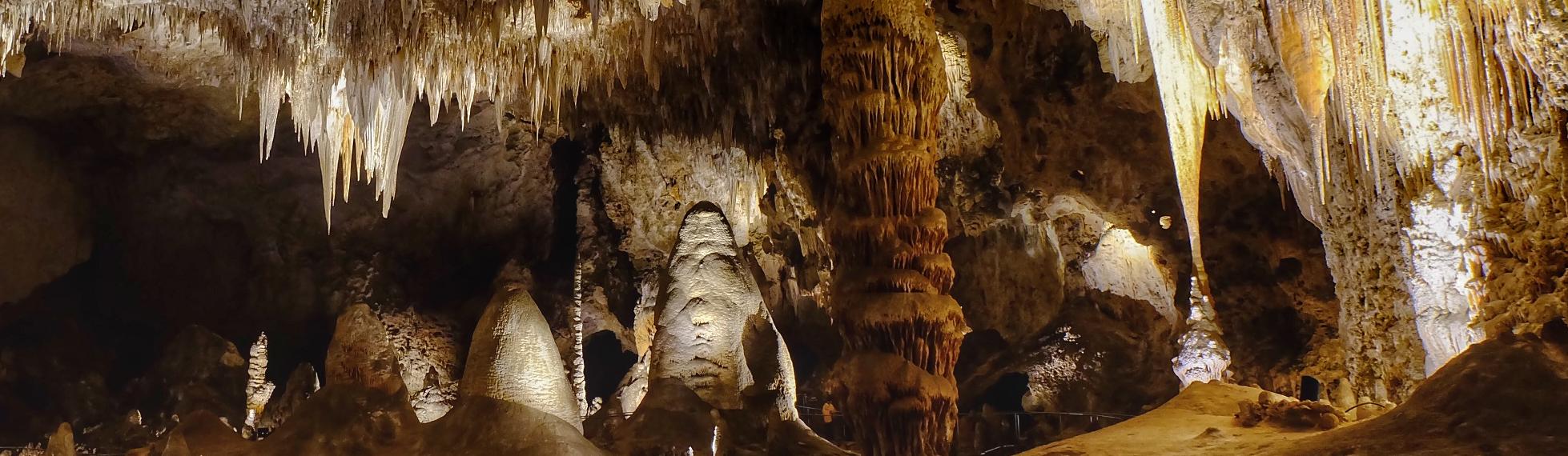
Carlsbad Caverns National Park protects about 46,766 acres of Chihuahuan Desert and more than 100 known caves, including the immense rooms, limestone formations, and underground passages of Carlsbad Cavern. The park recorded 410,778 recreation visits in 2025, with many visitors planning around the Big Room, Natural Entrance route, ranger-guided cave tours, and the seasonal bat flight program.
The park is also a desert landscape above ground, with rugged canyons, plants adapted to heat and drought, and a seasonal bat flight program that draws visitors near sunset. A good trip usually combines cave reservations with time for overlooks, desert trails, and the visitor center exhibits.
Carlsbad Caverns was first protected as a national monument on October 25, 1923, and became a national park on May 14, 1930. The park also became a UNESCO World Heritage Site in 1995, recognizing the scale, complexity, and scientific importance of the cave system beneath the desert.
For more information see the park's Wikipedia page.
For official park information, visit the official NPS page.
Top Hikes and Walks
Carlsbad Caverns has fewer surface trails than many national parks, so combine cave routes with desert walks and check NPS guidance before leaving developed areas.
Natural Entrance Trail is a 1.25-mile (2 km) cave route that descends about 750 feet (229 m) into Carlsbad Cavern; the route is steep, paved, and usually hiked downhill.
Big Room Trail is a 1.25-mile (2 km) cave loop with limited net elevation gain, circling some of the largest and most decorated rooms in the cave.
Chihuahuan Desert Nature Trail is a 0.5-mile (0.8 km) surface loop with about 30 feet (9 m) of elevation gain near the visitor center, highlighting desert plants and views.
Old Guano Road Trail is a longer desert route of about 3.7 miles (6 km) one way with moderate, rolling elevation change through exposed terrain and historic mining context.
Rattlesnake Canyon is a long backcountry-style route of about 6 miles (9.7 km) round trip with roughly 600 feet (183 m) of elevation change; check current NPS conditions before attempting it.
Carlsbad Caverns National Park Backpacking
Backcountry use is limited compared with large wilderness parks, but primitive desert travel is possible in designated areas with proper permits and preparation. Overnight visitors need to plan for no water, rough terrain, and strong temperature swings between day and night.
Things to Do in Carlsbad Caverns National Park
Use the NPS Things To Do page for current activity ideas, seasonal guidance, accessibility notes, and park alerts before planning your visit.
Cave tours are the main thing to do in Carlsbad Caverns National Park. The Big Room and Natural Entrance routes are the classic self-guided experiences, while ranger-guided Cave Tours and Reservations are important for visitors who want deeper access to the cave system.
The seasonal bat flight program is another major draw. Evening programs near the cave entrance give visitors a chance to watch bats leave the cavern when conditions and timing are right.
Photography, geology, and night-sky viewing are also strong reasons to spend more than a quick cave stop here. The park's limestone formations, desert plants, and quiet overlooks make the visit feel broader than the underground route alone.
Carlsbad Caverns National Park Camping and Lodging
There is no developed campground in the park. Backcountry camping requires a permit, and nearby public lands and private campgrounds serve most overnight visitors.
Official Carlsbad Caverns National Park Resources
Use the official NPS page, park map, and current alerts, plus reservation links when planning a trip to Carlsbad Caverns National Park.