Dry Tortugas National Park Overview
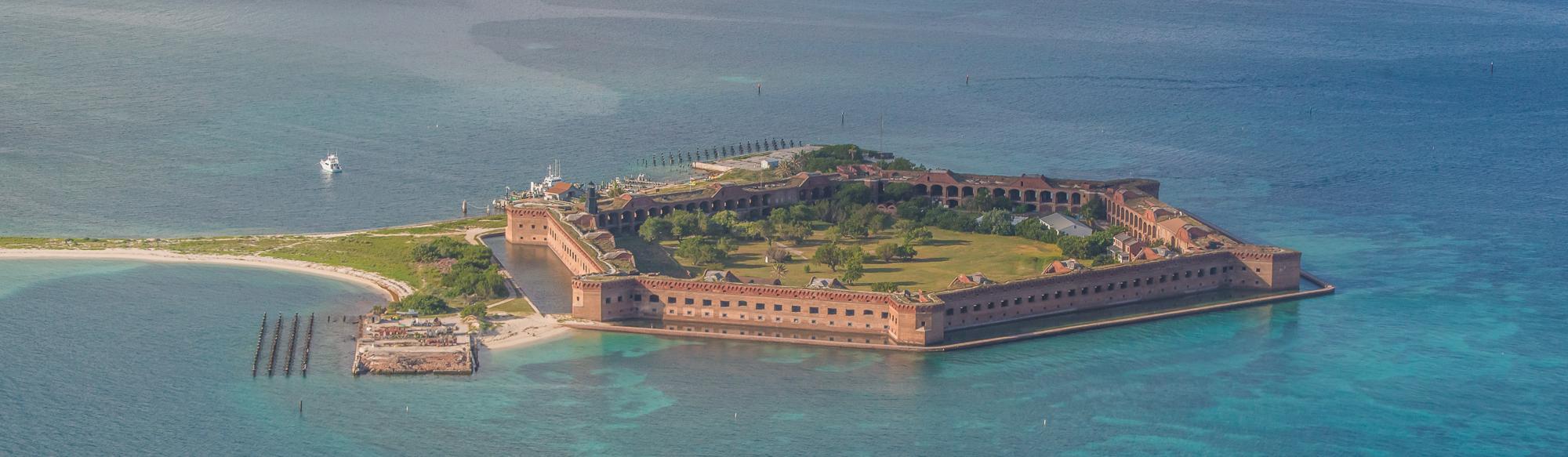
Dry Tortugas National Park protects about 64,701 acres of remote islands, coral reefs, blue water, bird habitat, shipwreck history, and Fort Jefferson about 70 miles west of Key West. The park recorded 89,355 recreation visits in 2025, making it one of the least visited parks in the lower 48 because every trip requires a ferry, seaplane, or private boat. Transportation reservations and weather planning shape almost every visit.
Garden Key and Fort Jefferson are the center of most day trips, with snorkeling around the moat wall, birding, photography, and historic tours all close together. The park has very limited services once visitors arrive, which makes food, water, shade, reef-safe sun protection, and seasickness planning important.
Fort Jefferson was first protected as a national monument in 1935, and the area became Dry Tortugas National Park on October 26, 1992. The park's story connects coastal defense, Civil War imprisonment, maritime navigation, Caribbean bird migration, coral reef protection, and remote island ecology.
For more information see the park's Wikipedia page.
For official park information, visit the official NPS page.
Top Walks
Dry Tortugas has very limited land area, so its routes are short walks rather than traditional hikes. Check NPS access information because some keys are closed seasonally for nesting birds or are only reachable by private boat.
Fort Jefferson Loop is about 0.6 mile (1 km) with minimal elevation gain around the fort's interior and parade ground.
Moat Wall Walk is about 0.6 mile (1 km) with minimal elevation gain around Fort Jefferson's outer wall, with open views of Garden Key and surrounding water.
Garden Key Beach Walk is about 0.5 mile (0.8 km) with minimal elevation gain along sandy shoreline and visitor-use areas.
Bush Key Walk can extend about 1 mile (1.6 km) with minimal elevation gain when the island is open outside bird-nesting closures.
Loggerhead Key walking routes can total several miles when reached by private boat, with minimal elevation gain and a remote-island setting; confirm access and conditions before planning this longer outing.
Walking, Snorkeling, and Camping in Dry Tortugas National Park
Dry Tortugas is not a hiking or backpacking park, but visitors can spend hours walking Fort Jefferson, the moat wall, and the shoreline around Garden Key. Snorkeling, swimming, paddling, and birding are the main outdoor activities, with conditions depending on wind, water clarity, and season.
Garden Key is the park's overnight camping area, where stays function more like remote island camping than backpacking. Campers must bring all supplies, including water, and be prepared to pack out trash and handle schedule changes caused by weather or transportation.
Things to Do in Dry Tortugas National Park
Use the NPS Things To Do page for current activity ideas, seasonal guidance, accessibility notes, and park alerts before planning your visit.
Fort Jefferson is the central thing to do in Dry Tortugas National Park. Visitors can tour the fort, walk the moat wall, photograph the brick arches, and learn about coastal defense, Civil War history, and remote island life.
Snorkeling is another major reason people visit Dry Tortugas. The moat wall, pilings, coral, fish, and clear water can make the park one of the best national park snorkeling destinations when weather and visibility cooperate.
Birding, swimming, paddling, beach walking, and photography round out a day trip to Garden Key. Spring migration and nesting seasons can make bird activity especially important for visitors interested in wildlife.
Camping on Garden Key allows more time for sunset, stars, snorkeling, and quieter fort views, but campers must bring all supplies and prepare for ferry schedules, weather delays, and limited services.
Dry Tortugas National Park Camping and Lodging
Garden Key Campground is the only regular campground in Dry Tortugas National Park. Campsites are primitive, close to Fort Jefferson, and reached by ferry, private vessel, or permitted transport.
Regular Garden Key sites are first come, first served once campers arrive, while group camping has separate rules. Campers must bring all water, food, shade, and supplies, and must pack out trash from this remote island setting.
Official Dry Tortugas National Park Resources
Use the official NPS page, park map, and current alerts when planning a trip to Dry Tortugas National Park.