Great Sand Dunes National Park and Preserve Overview
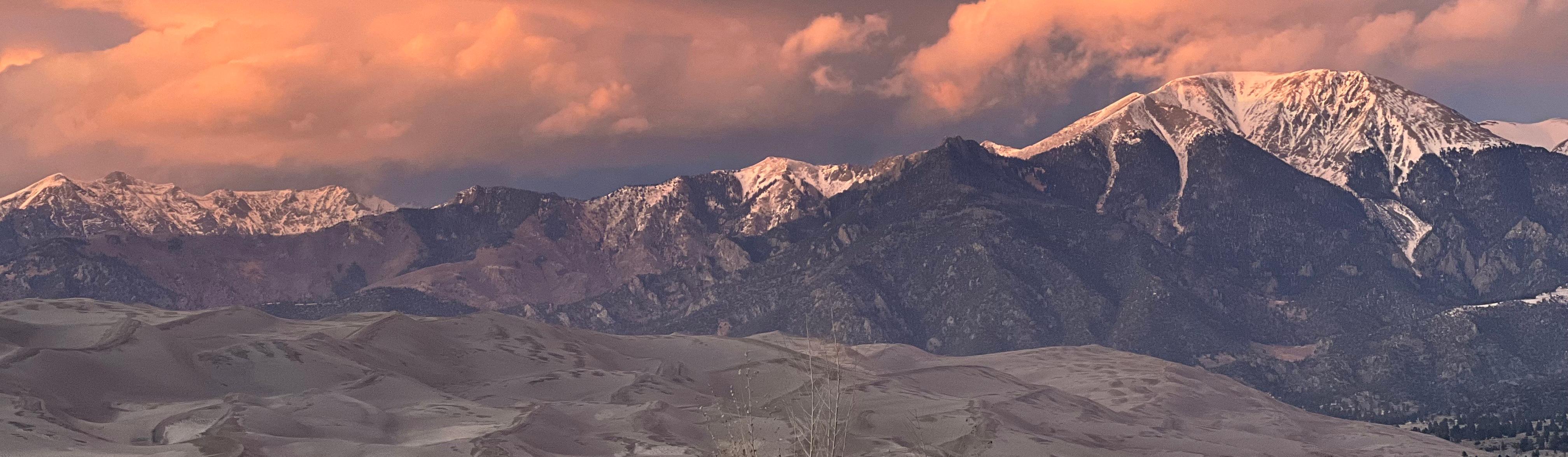
Great Sand Dunes National Park and Preserve protects about 149,028 acres of dunes, wetlands, grasslands, forests, alpine lakes, and Sangre de Cristo Mountain terrain in southern Colorado. The park recorded 432,498 recreation visits in 2025, with most visitors drawn first to the tallest dunes in North America and the seasonal flow of Medano Creek. The landscape changes dramatically with wind, snowmelt, temperature, and time of day.
Most first-time visitors spend time on the main dune field, where there are no fixed trails and distance is harder than it looks. The park also has forested hikes, alpine routes, four-wheel-drive access along Medano Pass Road, and backcountry zones that feel very different from the busy day-use area.
Great Sand Dunes was first protected as a national monument on March 17, 1932, and became a national park and preserve on September 13, 2004. The park protects a rare meeting of desert-like dunes, mountain watersheds, wetlands, and cultural history tied to Indigenous travel, ranching, and conservation.
For more information see the park's Wikipedia page.
For official park information, visit the official NPS page.
Top Hikes
Use the NPS Hiking page for current sand, heat, creek, and alpine trail conditions. Dune hikes have no fixed trail, so distances and elevation gain are approximate.
High Dune on First Ridge is about 2.5 miles (4 km) round trip with roughly 688 feet (209 m) of elevation gain over soft sand to a broad dunefield view.
Star Dune is about 6 miles (9.6 km) round trip with roughly 736 feet (224 m) of elevation gain to one of North America's tallest dunes.
Hidden Dune is about 7 miles (11 km) round trip with roughly 741 feet (225 m) of elevation gain to the tallest dune in North America.
Mosca Pass Trail is about 7 miles (11.3 km) round trip with roughly 1,400 feet (427 m) of elevation gain through forest to a low pass in the Sangre de Cristo Mountains.
Medano Lake Trail is the long alpine hike, about 7.4 miles (11.9 km) round trip with roughly 2,000 feet (610 m) of elevation gain from the Medano Pass Road to a high lake.
Great Sand Dunes National Park and Preserve Backpacking
NPS Backpacking guidance is useful for designated dune and mountain zones with permits. Dune camping can be spectacular under dark skies, but visitors need to plan for wind, sand, lightning, cold nights, water access, and the physical effort of carrying gear across soft sand.
Things to Do in Great Sand Dunes National Park and Preserve
Use the NPS Things To Do page for current activity ideas, seasonal guidance, accessibility notes, and park alerts before planning your visit.
Sandboarding and sledding are major visitor activities and work best with proper boards rented outside the park. Medano Creek is another seasonal highlight, especially during spring and early summer flows.
Stargazing, photography, wildlife viewing, camping at Pinon Flats, and sunset visits help make the park a strong overnight destination.
Great Sand Dunes National Park and Preserve Camping and Lodging
Pinon Flats Campground is the main vehicle-access campground inside Great Sand Dunes National Park, with seasonal reservations and convenient access to the dunes, Medano Creek area, and main day-use corridor.
Medano Pass Primitive Road has primitive roadside campsites when the road is open and conditions allow. These sites require high-clearance four-wheel-drive planning and are more self-sufficient than Pinon Flats.
Backcountry camping in dune and mountain zones requires permits and careful planning. Wind, lightning, hot sand, navigation, and overnight temperature swings are important hazards.
Pinon Flats Campground reservations and backcountry permits should be checked through Recreation.gov before arrival.
Official Great Sand Dunes National Park and Preserve Resources
Use the official NPS page, park map, and current alerts, plus reservation links when planning a trip to Great Sand Dunes National Park and Preserve.